Product Knowledge
Skincare Ingredients Glossary for Beginners
The skincare actives worth understanding first are hyaluronic acid for hydration, niacinamide for barrier support and oil balance, vitamin C for antioxidant protection and brightness, retinoids for cell turnover, and the exfoliating acids AHA and BHA.
Almost everything on a shelf is a variation on those, plus a moisturizer and a sunscreen. Knowing what each does — and which pairs badly with which — covers most of what a customer or a new retailer needs.
This glossary is written in plain language, with the practical layering rules at the end.
Hydrators: hyaluronic acid and glycerin
Hyaluronic acid is a humectant: it draws water and holds it in the upper layers of the skin. It does not repair the barrier and it does not treat anything — it hydrates, which makes skin look plumper and feel more comfortable.
It works best applied to slightly damp skin and sealed with a moisturizer on top. Applied to dry skin in a dry environment with nothing over it, a humectant can pull moisture from the skin rather than into it, which is a genuine issue in a heated Michigan house in January.
Glycerin does much the same job, is far cheaper, and is in most decent moisturizers already. A product list heavy on hyaluronic acid serums and light on actual moisturizers is a poorly built routine.
Niacinamide: the most broadly useful active
Niacinamide is a form of vitamin B3 that supports the skin barrier, helps regulate oil production, and can reduce the appearance of redness and uneven tone over time. It is well tolerated by most skin types.
Typical useful concentrations run around 4 to 10 percent. Higher is not better — concentrations above roughly 10 percent are more likely to cause flushing or irritation in sensitive skin without adding proportionate benefit.
It is the safest first active to recommend to someone new, because it does something useful for most people and rarely causes problems.
Vitamin C: antioxidant protection
Vitamin C, most commonly as L-ascorbic acid, is an antioxidant that helps defend against environmental damage and can improve brightness and evenness of tone with consistent use.
It is unstable and oxidation-prone, which is why packaging matters so much. Opaque, airless containers protect it; clear jars do not. A serum that has turned deep orange or brown has degraded substantially.
Common effective concentrations run from about 10 to 20 percent, and it is usually applied in the morning under sunscreen. Derivatives such as magnesium ascorbyl phosphate are more stable but generally less potent.
Retinoids: turnover and texture
Retinoids — retinol, retinaldehyde, and prescription tretinoin — increase cell turnover. They are the most evidence-supported ingredient category for texture, fine lines and congestion, and they are also the most likely to cause irritation.
Start low and infrequently. Two nights a week at a low strength, building slowly, avoids the classic mistake of using a strong retinoid nightly from day one and ending up with a damaged barrier that takes weeks to recover.
Retinoids are used at night, and daily sunscreen is genuinely necessary alongside them. Anyone selling a retinoid without also selling a sunscreen has sold half a routine.
Exfoliating acids: AHA and BHA
AHAs — glycolic and lactic acid — are water-soluble and work on the skin surface, helping with texture, dullness and uneven tone. Lactic acid is gentler than glycolic and a better starting point for sensitive skin.
BHA — salicylic acid — is oil-soluble, which lets it work inside the pore. That makes it the more useful choice for congestion, blackheads and oily skin.
Both are easy to overuse. Exfoliating daily with acids, especially alongside a retinoid, is the most common route to a compromised barrier — which presents as stinging, redness and skin that suddenly reacts to products it previously tolerated.
What not to layer
The rules worth knowing are few. Do not use a strong AHA or BHA on the same night as a retinoid until you know your skin tolerates both. Do not stack multiple exfoliating acids in one routine. Do not combine a high-strength vitamin C with strong acids in the same application.
Benzoyl peroxide and retinoids can deactivate each other depending on formulation, so separate them by time of day rather than layering.
The broader principle is simpler than any list: one active per routine step, introduced one at a time, with at least a week between additions. Most irritation comes from doing too much at once rather than from any single ingredient being wrong.
How to read an ingredient list
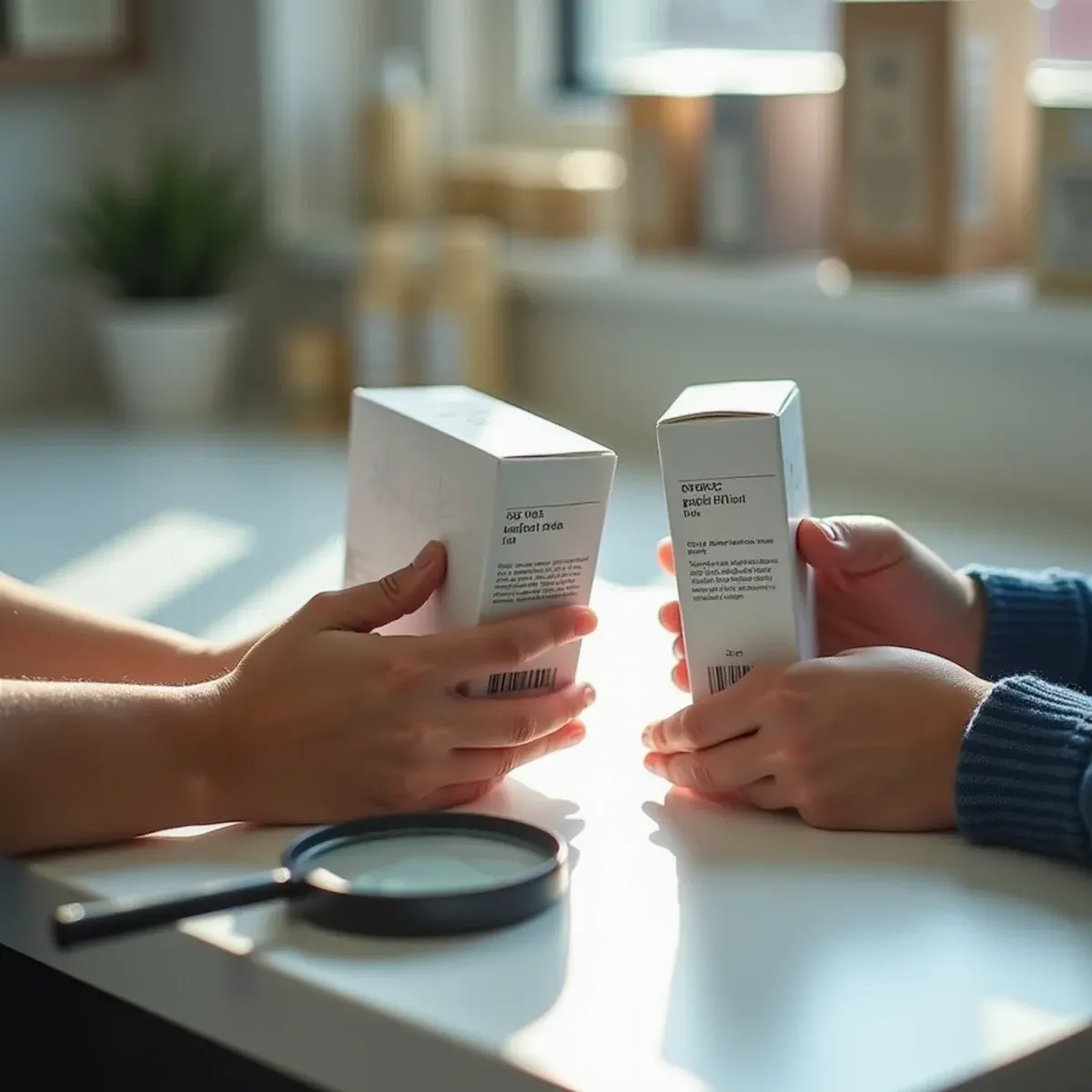
Ingredient lists on US cosmetics are written in INCI names, a standardized naming system, which is why the same ingredient reads the same way across brands. Ingredients above one percent are listed in descending order by weight, so the first few entries are most of what is in the bottle. Water usually leads, followed by the solvents, emollients and thickeners that make up the base.
Below one percent the order stops meaning anything. Ingredients present at one percent or less may be listed in any order after the ones above it, and color additives may be listed without regard to predominance at all. Percentages are not required on the label, so an active named on the front of the box may sit anywhere from a meaningful level to a token one, and the list alone will not tell you which.
Some entries stand for more than they say. Fragrance components can be declared collectively as fragrance or parfum, because those formulas are treated as trade secrets, so one word can represent a mixture. Front-of-pack terms carry even less weight: natural, clean and hypoallergenic have no regulatory definition in the US, which makes them positioning rather than composition. The list on the back is the part that is defined.
What the rest of the list is doing
Most of a formula is not active. Emollients — plant oils, esters, squalane, fatty alcohols — soften the surface and give a product its slip and feel. Occlusives such as petrolatum, dimethicone and waxes sit on top and slow water loss from the surface. Between them they decide most of what a moisturizer feels like, and most of what it costs to make.
The structural ingredients rarely get mentioned on the front. Emulsifiers hold oil and water together so a cream does not split. Thickeners such as carbomer and xanthan gum set the texture. Surfactants do the cleaning in a face wash. Preservatives, chelating agents and pH adjusters sit near the end of the list at low levels and keep the formula stable and usable through its life.
People assume a reaction came from the headline active, when the rest of the formula is equally part of the picture. That is the reasoning behind a patch test: apply a small amount to a discreet area such as the inner forearm, leave it for a day or two, and see how your skin responds before using it more widely. This is general product information rather than medical or dermatological advice, and anyone with a skin condition should speak to a clinician.
Frequently asked questions
What is the best skincare active for a beginner?
Niacinamide, at around 4 to 10 percent. It supports the barrier, helps regulate oil and evens tone over time, and it is well tolerated by most skin types with little irritation risk.
Can I use retinol and AHA together?
Not until you know your skin tolerates both separately. Combining them is the most common cause of a compromised barrier — stinging, redness and sudden reactivity to previously fine products.
Why does vitamin C serum turn orange?
It has oxidized. Vitamin C is unstable and degrades on exposure to air and light, which is why opaque or airless packaging matters. A deep orange or brown serum has lost much of its effectiveness.
How often should exfoliating acids be used?
Start at two to three times a week rather than daily, and never stack multiple acids in one routine. Daily acid exfoliation, particularly alongside a retinoid, is the fastest route to barrier damage.
What does the order of ingredients on a label tell you?
Ingredients above one percent are listed in descending order by weight, so the first several entries make up most of the product. Below that line the order is free, and color additives can be listed in any position. Percentages are not required on the label, so the list shows what is present, not how much.
What does fragrance mean on an ingredient list?
It is a collective entry. US labeling allows the components of a fragrance to be declared together as fragrance or parfum, because those formulas are treated as trade secrets, so a single word can stand for a mixture of many components. Unscented and fragrance-free are marketing terms with no regulatory definition.
How do you patch test a new product?
Apply a small amount to a discreet area such as the inner forearm, leave it in place, and watch how your skin responds over the next day or two before using it more widely. It is a general practice rather than a guarantee. This is product information, not medical advice — see a clinician about any skin condition.
Does clean or hypoallergenic on a label mean anything?
Not in a regulated sense. Clean, natural and hypoallergenic have no legal definition in US cosmetics labeling, so each company decides what it means by them. They describe how a product is positioned rather than what is in it. The INCI list on the back is the part with rules behind it.