Product Knowledge
How to Spot Counterfeit Beauty Products Before You Buy
Counterfeit beauty products are identified by four checks: packaging and print quality, batch code consistency, product texture and smell, and a price that does not make commercial sense. Any one of these failing is reason to stop; two failing is close to conclusive.
This matters beyond wasted money. Counterfeit cosmetics have been found to contain contaminants and unapproved ingredients, and a retailer who sells one is the person the customer holds responsible.
The checks below take a few minutes per shipment and are worth building into a routine, particularly for anyone buying through marketplaces or unfamiliar intermediaries.
Start with the price, before the product
Counterfeits are usually detected first by arithmetic. A product offered well below what a legitimate wholesale account could obtain it for is being sold at a loss by someone, and that rarely has an innocent explanation.
Learn what genuine wholesale looks like for the categories you buy. Once you know the realistic floor, an offer beneath it becomes an immediate flag rather than an apparent bargain.
The common exceptions are legitimate: discontinued lines, short-dated stock, packaging changes and genuine clearance. A credible seller will tell you which of those applies without being pressed.
Check the packaging closely
Counterfeit operations reproduce shape and color well and reproduce print quality badly. Look for slightly soft or fuzzy text, color that is close but not exact, misaligned printing, and inconsistent font weight across the same panel.
Check the finish and construction. Genuine packaging tends to have precise seams, consistent gloss and components that fit without play. Caps that wobble, pumps that feel loose and boxes with imprecise folds are common tells.
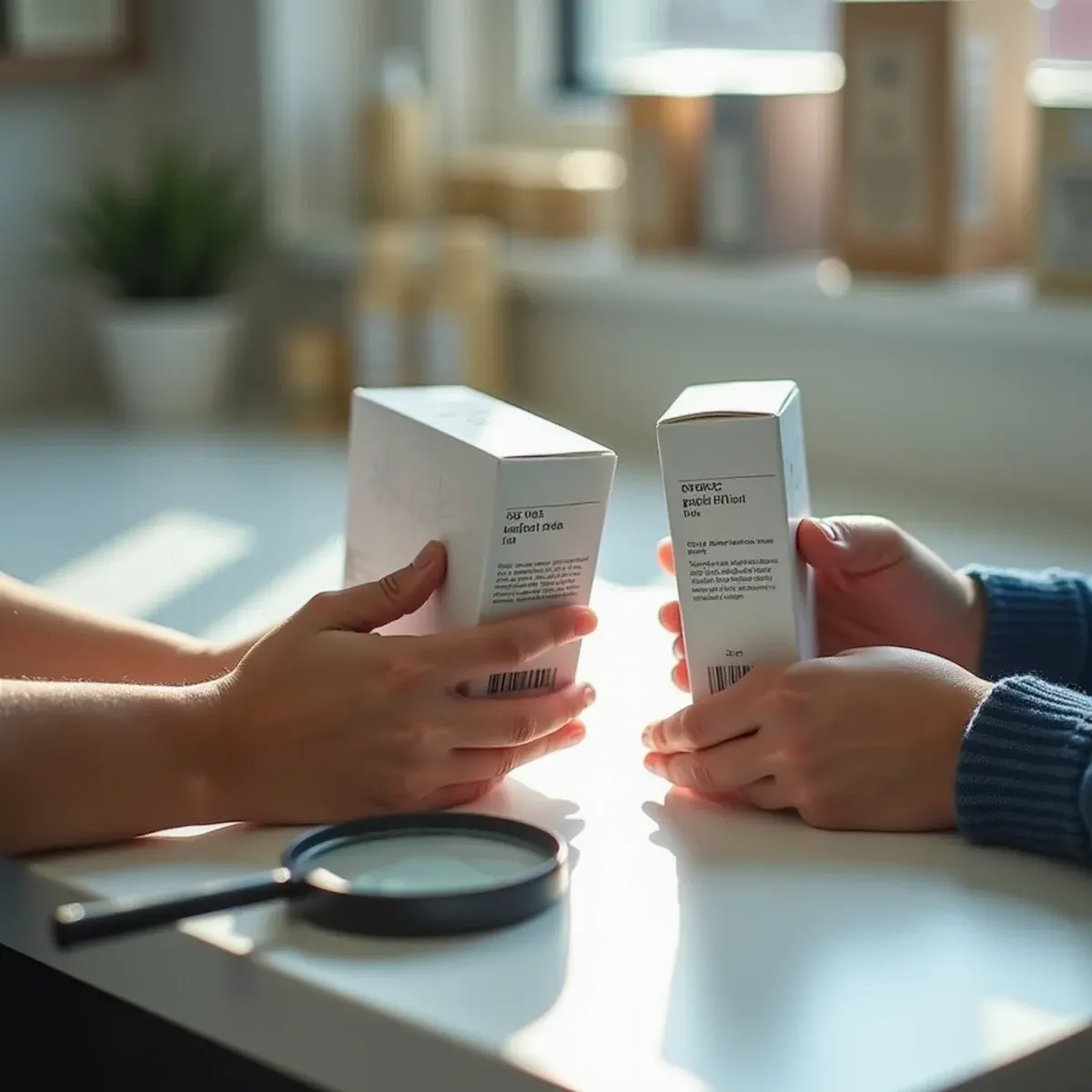
Compare against a known genuine unit whenever you can. Differences that are invisible in isolation become obvious side by side, which is why keeping one verified reference unit per line you carry is worth the shelf space.
Verify batch codes and dates
Genuine cosmetics carry batch codes, and those codes should be consistent between the outer packaging and the product itself. A mismatch, a missing code, or a code that looks printed by a different process is a serious flag.
Look at how the code is applied. Manufacturers typically use laser etching or ink-jet coding that is crisp and slightly irregular in position. Counterfeits often use stickers, or print codes that are suspiciously uniform across an entire batch.
Within a single shipment, identical batch codes across every unit of a supposedly high-volume product are unusual. Genuine stock usually shows some variation across production runs.
Assess the product itself
Texture and smell are the hardest attributes to fake. Counterfeit cosmetics frequently feel wrong — grainier, greasier, thinner, or with pigment that separates in a way the genuine product does not.
Smell is particularly reliable. Fragrance formulation is expensive, and counterfeits commonly smell harsher, more chemical, or simply different from the product they imitate.
For pressed products, look at the pan. Genuine pressed powders and shadows are pressed evenly with a consistent surface; counterfeits often show uneven density, visible pressing marks or a surface that crumbles under light pressure.
Buy in a way that makes counterfeits unlikely
The most effective defense is structural rather than forensic. Buy from suppliers who can tell you where their stock comes from, and be cautious of intermediaries who cannot or will not.
Marketplaces carry the highest risk because listings can be commingled and sellers change frequently. A product that arrives from a different entity than the one you ordered from is worth inspecting carefully.
Buying from a supplier you can visit removes most of this risk in one step. Seeing stock in person, asking where it came from and getting a direct answer is far more reliable than any checklist applied after delivery.
What to do if you suspect a counterfeit
Stop selling it immediately. The commercial loss of pulling stock is far smaller than the liability and reputational damage of a customer reacting badly to a contaminated product.
Document what you have: photographs of packaging, batch codes, the invoice and any correspondence. This is what you will need for a refund claim and for any report you choose to make.
Report it. Counterfeit cosmetics can be reported to the brand owner directly, and consumer safety concerns can be raised with the US Food and Drug Administration through its adverse event reporting channels.
Tamper-evident seals and verification features
Most beauty packaging leaves the factory with at least one tamper-evident feature: a shrink band around the cap, a foil seal under the lid, a security sticker across the carton flap, or a pump locked down for shipping. A unit that arrives with that feature missing, already split, or visibly re-applied has been opened by someone. Set it aside and inspect the rest of the shipment before you shelve any of it.
Holograms are worth examining but are not proof on their own. Counterfeiters copy them, so judge the execution rather than the presence: a factory hologram sits flat and thin, adheres cleanly to the surface, and tends to tear or leave residue if lifted. A thick plastic-feeling sticker with peeling edges that comes away in one piece was added after the fact.
Some brands run their own authentication programs, where a serial number or a code on the carton is entered or scanned and checked against the manufacturer’s database. Use those where they exist, but start from the brand’s own website rather than a link or code supplied by the seller. A verification page that the seller controls confirms nothing, and a code that returns an instant pass with no product detail deserves a second look.
Counterfeit, or genuine stock in the wrong channel?
Not every suspicious lot is fake. Product diversion is the other explanation: genuine goods that leak out of an authorized distributor or a promotional allocation and end up with a seller the brand never appointed. The product itself is real. What you lose is the guarantee that it was stored and handled correctly on the way to you, and any support the brand offers its authorized accounts.
Both problems are caught the same way: follow the paper. Ask who the stock was bought from, and expect an invoice that names a real distributor rather than a vague intermediary. Many brands publish a list of authorized stockists on their own site, and checking a supplier against it takes a minute. Sellers with clean sourcing answer this question quickly; the ones that stall are telling you something.
The two outcomes differ. Diverted stock is a contract matter between the brand and whoever leaked it, and the main cost to you is unknown handling. Counterfeit stock is a safety and liability matter. If you conclude a shipment was counterfeit and imported, US Customs and Border Protection accepts reports through its e-Allegations system, and the National Intellectual Property Rights Coordination Center accepts referrals as well.
Frequently asked questions
What is the fastest way to spot a counterfeit cosmetic?
Price first, then print quality on the packaging. An offer below realistic wholesale is a flag, and counterfeit operations reproduce shape well but print text and color poorly.
Are batch codes a reliable check?
Largely, yes. Codes should match between outer packaging and product, be applied by laser or ink-jet rather than sticker, and show some variation across a shipment rather than being identical on every unit.
Are counterfeit cosmetics actually dangerous?
They can be. Counterfeit cosmetics have been found to contain contaminants and unapproved ingredients, and the retailer who sold the product is who the customer holds responsible.
What should I do with suspected counterfeit stock?
Stop selling it immediately, document packaging, batch codes and invoices, pursue a refund, and report it to the brand owner. Safety concerns can be reported to the US Food and Drug Administration.
Does a hologram or QR code prove a product is genuine?
No. Counterfeiters reproduce both. Judge a hologram by execution — factory holograms sit flat and thin and tear when lifted, while added stickers feel thick and peel off intact. If a brand runs a serial verification program, start from the brand’s own website rather than a code or link the seller gives you.
What is the difference between a counterfeit and a gray market product?
A counterfeit is a fake made by someone other than the brand. A gray market or diverted product is genuine stock that leaked out of an authorized channel and reached a seller the brand never appointed. Diversion is mainly a contract problem and a handling unknown; counterfeiting is a safety and liability problem.
How do I check that a supplier is an authorized stockist?
Ask who they buy from and expect an invoice naming a real distributor. Many brands publish an authorized stockist list on their own website, so check the supplier against it directly. A supplier with clean sourcing answers in a sentence. Vagueness about the chain above them is the answer, whether or not they intend it.
What if the tamper seal is broken or missing?
Treat the unit as unsellable. A shrink band, foil seal, security sticker or factory-locked pump that is missing, split or re-applied means the package was opened by someone after it left the manufacturer. That may be handling damage rather than fraud, but you cannot tell which, and neither can your customer.