
Local Guides
Michigan Winter Skincare: Products That Actually Handle the Cold
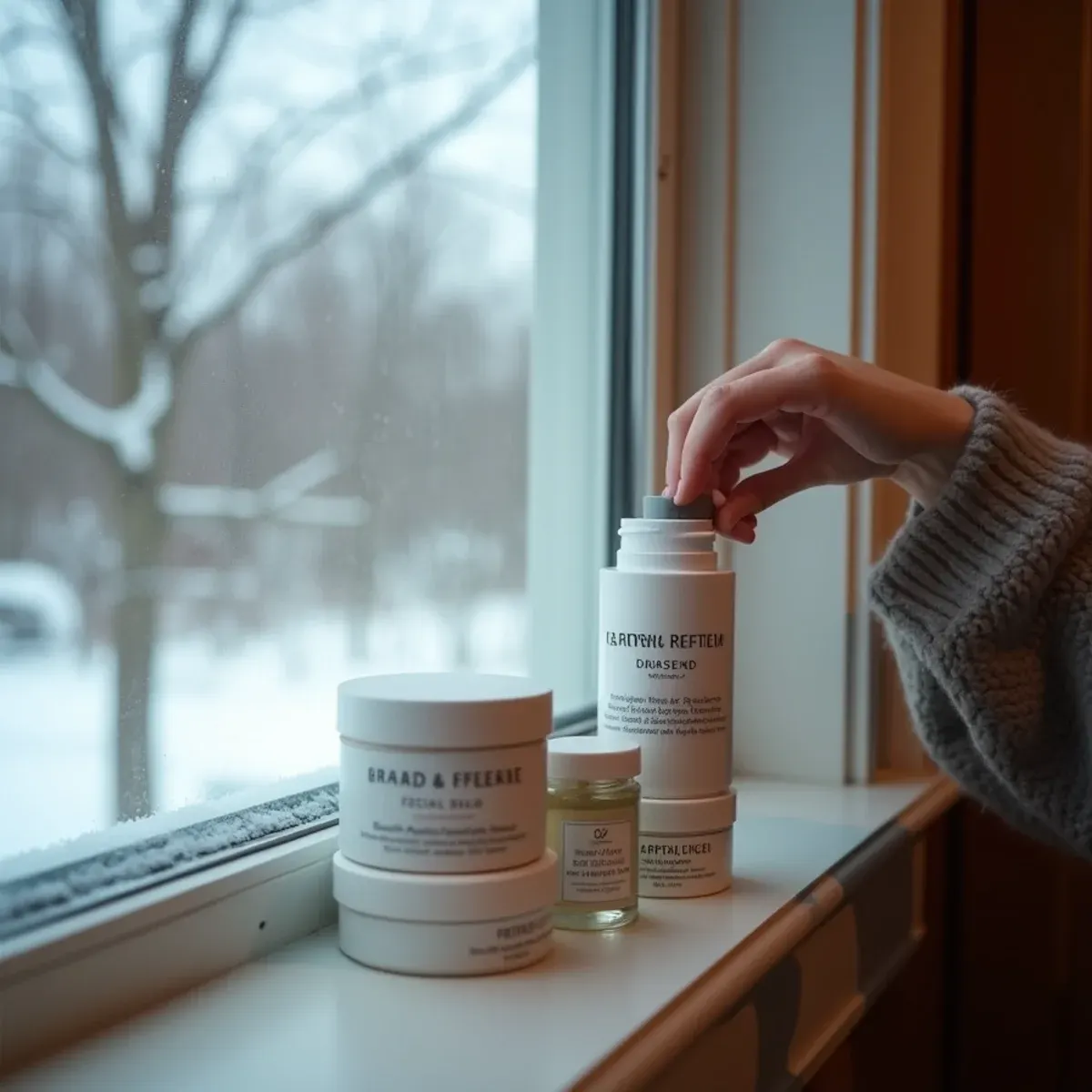
Michigan winter skincare means switching to a gentler cleanser, adding a barrier-repair moisturizer, and using an occlusive layer at night. The problem is not simply cold — it is cold outdoor air and heated indoor air stripping the skin barrier from opposite directions, all day, for roughly five months.
Outdoor humidity falls with the temperature, so the air itself pulls moisture from exposed skin. Indoors, forced-air heating drops relative humidity further still, often below thirty percent in a typical Warren-area home.
The result is a barrier under continuous stress. What follows is what to change, and what businesses should have on the shelf before the first hard freeze.
Fix the cleanser first
The single most effective winter change is switching from a foaming or stripping cleanser to a cream, milk or gentle gel formulation. A cleanser that felt fine in July will leave skin tight and uncomfortable in January, and that tightness is barrier damage rather than cleanliness.
Water temperature matters more than people expect. Hot showers feel excellent in a Michigan winter and are genuinely hard on the skin barrier, particularly on the face and hands.
For most people this one change resolves a meaningful share of winter discomfort before any product is added to the routine.
Add barrier repair, not just hydration
Hydration and barrier repair are different jobs. A hyaluronic acid serum adds water; a barrier cream helps the skin hold it. In winter, adding water without sealing it in can make things worse rather than better.
Look for ceramides, cholesterol and fatty acids — the lipids the barrier is actually built from. These are what a damaged winter barrier is short of, and replacing them is more useful than layering another humectant.
A useful sequence for a Michigan January: gentle cleanser, hydrating layer on damp skin, barrier cream to seal, and an occlusive balm at night on the areas that crack.
Occlusives for the areas that actually break
Lips, hands, knuckles and the sides of the nose are where Michigan winters do visible damage. These areas need occlusion — a physical barrier that stops water leaving — rather than more moisturizer.
Petrolatum-based balms and heavy ointments are the most effective option, and they work best applied to slightly damp skin so there is moisture to seal in.
Hands need the most attention because they are washed repeatedly and exposed constantly. A hand cream by every sink, used after each wash rather than once a day, prevents most winter hand damage.
Do not drop sunscreen in winter
UVA is present year-round and passes through cloud cover and window glass. Snow reflects a significant proportion of UV back upward, which is why skiers burn on overcast days.
Winter sunscreen use collapses in Michigan because the sun feels absent. It is the most commonly skipped step of the season and the one with the longest-term consequences.
For retailers, this is also a stocking observation: sun care is chronically under-ordered here between November and March, and that is a lost sale rather than an absent demand.
What businesses should stock before November
Barrier creams and ceramide moisturizers, occlusive balms, lip treatments, hand creams, gentle non-foaming cleansers, facial oils and body butters. These are the seven categories that carry a Michigan winter.
Order them in early autumn rather than after the first cold snap. National distributors plan on averaged demand across climates, which is precisely why Michigan retailers run short in the exact weeks demand peaks.
Depth matters more than breadth here. Two excellent barrier creams held in quantity will outperform six held thinly, because winter demand concentrates on the products that visibly work.
The salon and spa side
Treatment rooms see a clear seasonal shift in what clients present with: tightness, flaking, redness and sensitivity that was not there in September. Treatment menus and retail should both follow that.
Hydrating and barrier-focused facials outperform exfoliation-led treatments in deep winter, and aggressive peels on an already compromised barrier are how clients end up worse after a treatment than before it.
On retail, the take-home counterpart to a hydrating winter facial is the easiest sale of the season. A client who has just felt the difference will buy the barrier cream if it is on the shelf.
What the cold does to the products themselves
Water-based emulsions — lotions, serums, liquid foundations — hold oil and water together with an emulsifier. Freeze them and ice crystals form inside that structure, and what thaws can come back grainy, watery or visibly separated. Anhydrous balms and ointments have no water to freeze, so they harden and usually recover once warm. That difference decides what you can afford to leave cold.
The risk points here are familiar: a delivery left on a porch or a loading dock overnight in January, a pickup order that sits in a trunk, a stockroom over an unheated garage. Repeated freeze and thaw cycles do more damage than one cold night. Bring orders indoors, let them reach room temperature before you open them, and check for separation, graininess, an odor shift or a color change.
Practical rules for the season: time deliveries for when somebody is there to take them in, never overwinter stock in a garage or an unheated back room, and give aerosols and nail polish time to warm up before use rather than judging them cold. Short transit also matters, which is one quiet argument for buying close to home when the temperature is in the single digits.
Wind, road salt and the scalp under the hat
Wind does its own damage. Moving air pulls surface lipids and water off exposed skin faster than still air of the same temperature, which is why a short walk across a parking lot can leave a face stinging and raw. That is barrier disruption, not a burn. An occlusive layer applied before going out helps, and a scarf across the lower face helps more than any product.
Road salt is the second exposure. Salt pulls water out of skin, and undissolved crystals are abrasive, so hands that grip car doors, shovels and salted railings crack earlier than the rest of you. The same is true of ankles and shins above a boot line. Rinse the salt off and re-cream then, rather than waiting until the end of the day.
The scalp is skin, and it spends the Michigan winter under a hat and over a heating vent. Small dry white flakes are a different problem from the oily yellowish flakes of dandruff, and an antifungal shampoo aimed at the wrong one leaves the scalp drier. Retailers and salons both under-stock this: there is usually plenty of anti-dandruff on the shelf and nothing for a genuinely dry scalp.
Frequently asked questions
Why does skin get worse in a Michigan winter?
Cold outdoor air holds little moisture and heated indoor air holds less, so the barrier is stripped from both directions. Indoor relative humidity in a heated home often falls below thirty percent.
What is the single best winter skincare change?
Switching from a foaming or stripping cleanser to a cream, milk or gentle gel. Post-cleanse tightness is barrier damage, not cleanliness, and this one change resolves much of it.
Do I need sunscreen in a Michigan winter?
Yes. UVA is present year-round and passes through cloud and window glass, and snow reflects UV upward. Winter sunscreen use collapses here, which is why winter sun damage is common.
What should Michigan retailers stock before November?
Barrier and ceramide creams, occlusive balms, lip treatments, hand creams, gentle non-foaming cleansers, facial oils and body butters — ordered in early autumn, held deep rather than broad.
Can cold weather damage beauty products in transit or storage?
Yes. Water-based emulsions such as lotions, serums and liquid foundations can separate or turn grainy after freezing, and repeated freeze-thaw cycles are worse than a single cold night. Anhydrous balms and ointments usually recover once warm. Bring deliveries indoors, let them reach room temperature, and avoid storing stock in an unheated garage.
What is windburn, and how is it different from dry skin?
Windburn is barrier damage rather than a burn. Moving air strips surface lipids and speeds water loss, leaving exposed skin red, tight and stinging after a short time outdoors. Ordinary dry skin builds slowly; windburn appears fast on the face, ears and lips. An occlusive layer before going out and a scarf are the practical defenses.
Does road salt affect your skin?
It does. Salt draws water out of the skin and undissolved crystals are abrasive, so hands that grip car doors, shovels and salted railings crack earlier than skin that stays covered. Ankles and shins above the boot line take the same hit. Rinse the salt off and apply cream then, not hours later.
Is winter scalp flaking the same as dandruff?
Usually not. Dry-scalp flakes are small, white and dry; dandruff flakes are larger, oilier and yellowish. Winter cold and forced-air heat cause the first, and an antifungal shampoo aimed at the second will leave a dry scalp worse. Salons and retailers tend to carry anti-dandruff and nothing for the dryness that peaks in January.