Retail Strategy
Best-Selling Beauty Products for Small Boutiques
The beauty categories that turn fastest in small boutiques are lip products, hand and body care, fashion jewelry and gift sets. All four share the same characteristics: an impulse price point, no shade-matching required, and no meaningful expiry risk.
The categories that tie up capital on a small floor are foundation, active skincare and anything requiring a broad shade or size range. These are not bad products — they are simply the wrong shape for a small retail space.
The distinction is about matching stock to how people actually shop a boutique: quickly, without a consultation, often for someone else.
Why impulse price points do the heavy lifting
Boutique purchases are largely unplanned. A customer came in for something else, or for nothing specific, and buys because an item is appealing and the price does not require thought.
That places most of the volume in a fairly narrow band. Items priced where a customer does not need to weigh the decision move consistently; items priced above that threshold need a reason, and a reason usually needs a conversation.
This is why a boutique can outperform a larger store per square foot on accessories while losing decisively on foundation. The format suits one and not the other.
Lip products: the most reliable beauty category
Lip is the fastest-turning beauty impulse category in almost every small retail format. It needs no shade matching against skin tone, it is easy to try, the price point is comfortable, and it is bought both for oneself and as a gift.
Stock a core of wearable shades held with depth rather than a broad rotating selection. Nudes, warm mid-tones and a classic red will outsell a wide spread of fashion shades in a boutique setting.
Balms and treatment lips deserve their own space, particularly in Michigan between October and April, when they shift from a want to a need.
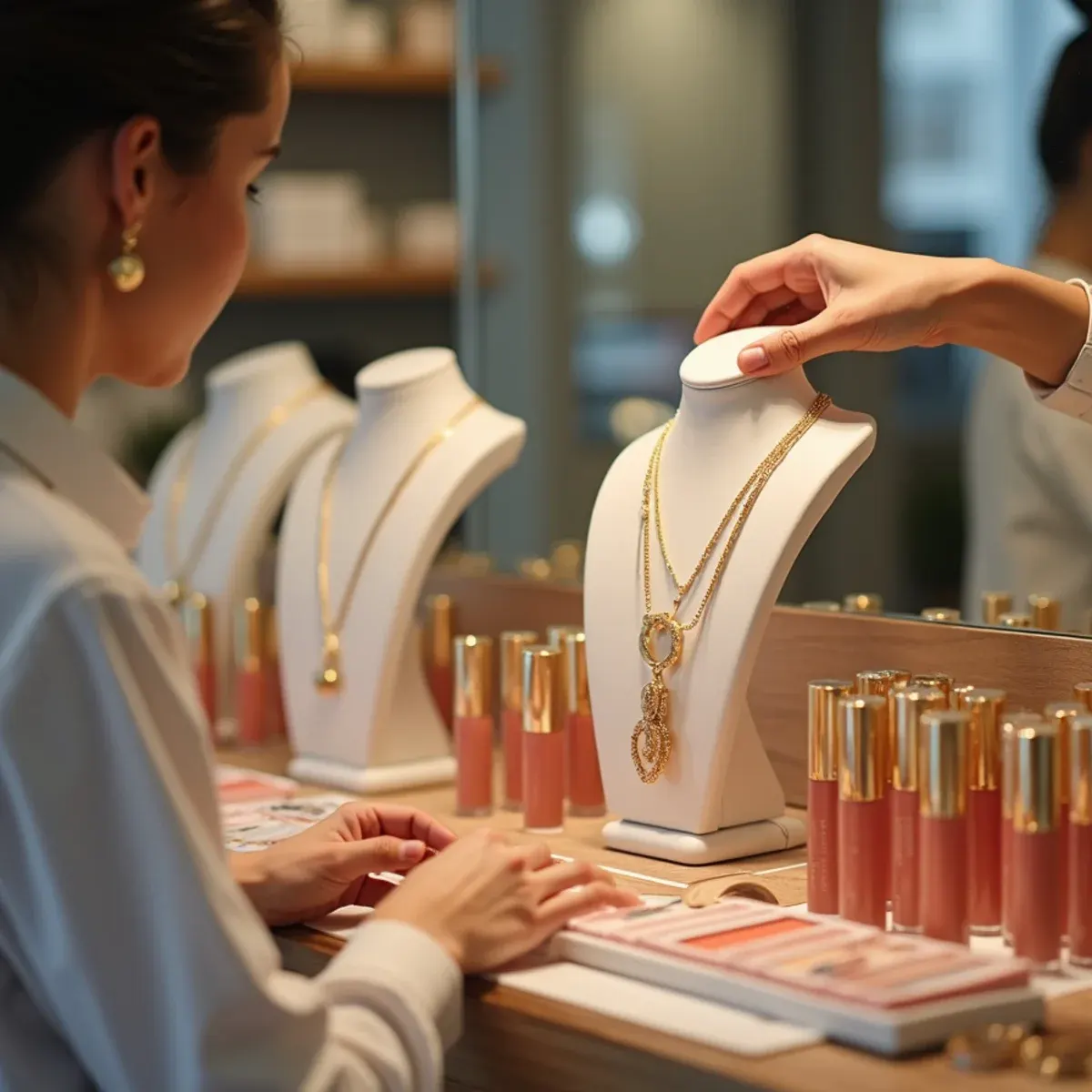
Fashion jewelry: the highest-margin low-risk option
Jewelry is close to an ideal small-boutique category. There is no expiry, no shade matching, no size range for most items, and the margin is generally better than commodity beauty.
It is also the category most beauty suppliers in this region simply do not carry, which means a boutique offering cosmetics and jewelry from one coherent display is doing something local competitors find awkward to copy.
Anchor the buy in trend-resistant core styles — gold and silver hoops, simple studs, everyday chains — and keep the trend layer deliberately shallow. Trend jewelry is high-reward and short-lived, and depth on it becomes markdown.
Hand and body care: steady, seasonal and giftable
Body and hand care is replacement-driven rather than trend-driven, which makes it the most predictable category on a boutique shelf. Customers who buy a hand cream come back when it runs out.
In Michigan the seasonal lift is pronounced. Demand for hand creams, body butters and lip treatments climbs sharply from October and holds through April, driven by cold outdoor air and heated indoor air.
It also bundles well, which matters. Body care is the backbone of most gift sets because it is universally useful and requires nothing to be known about the recipient.
Gift sets: where a small floor beats a large one
Gift sets let a boutique compete on curation rather than price. A well-assembled set carries higher perceived value than its components and moves slower stock alongside proven sellers.
Keep the structure simple: one anchor item that justifies the purchase, two or three supporting pieces, and presentation that matches the price band. Sets of four equally small items read as sample bags rather than gifts.
Band the prices. Gift buyers shop to a budget, so three clear price points convert better than eight sets at eight different prices.
What to avoid on a small floor
Foundation is the clearest example. Doing it properly requires genuine shade depth, and a partial range actively damages your reputation with the customers it fails to serve. Better to skip the category than to serve it badly.
Active skincare is the second. It needs explanation, it carries real shelf-life risk, and customers increasingly want to discuss concentrations — which is a service proposition rather than a shelf proposition.
Anything with a size range is the third. Sized products multiply stock-keeping units without multiplying sales, and on a small floor that is the fastest way to look full while selling nothing.
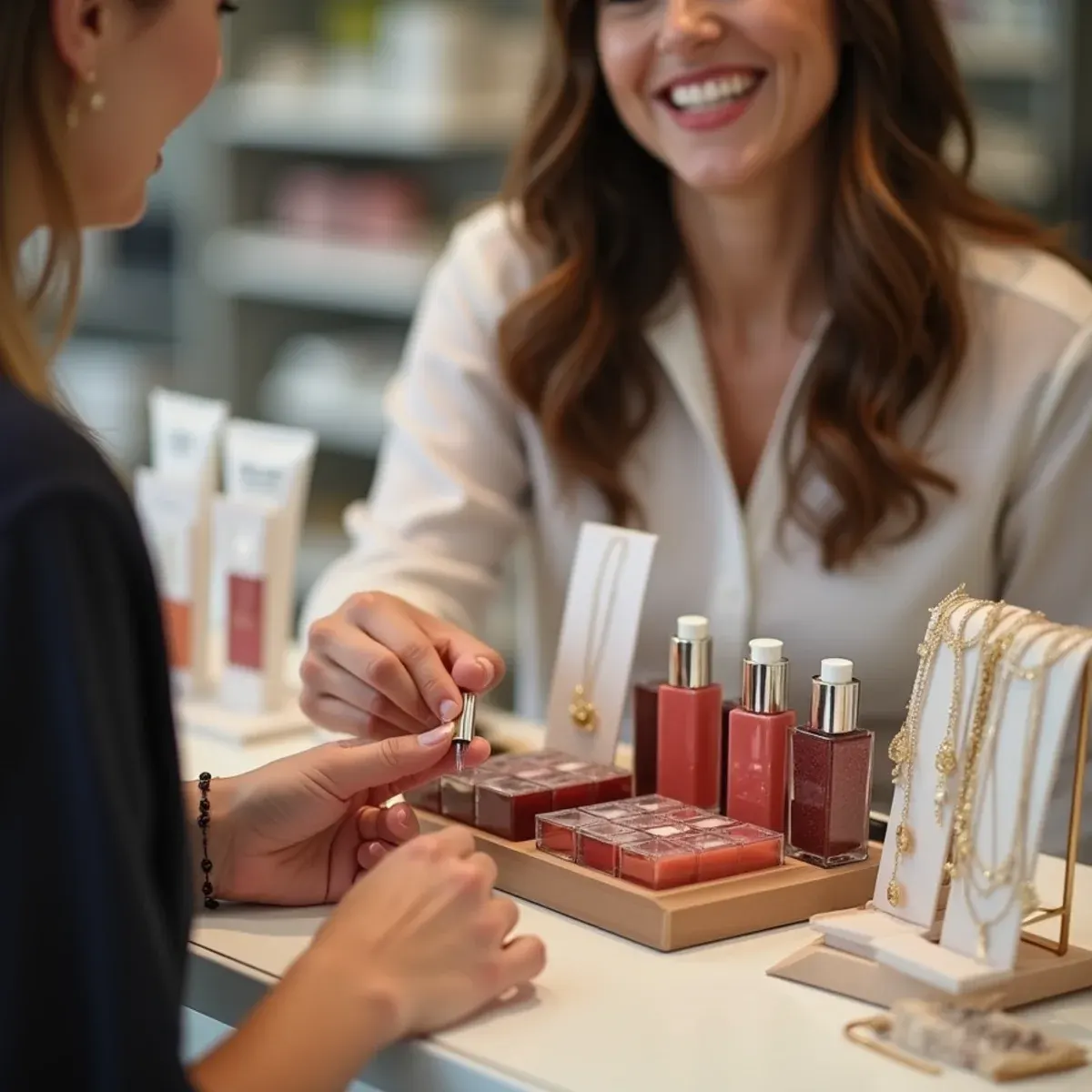
Testers, hygiene and the cost of letting people try
Trying is what sells color, and a shared tester is a genuine hygiene problem. Research on in-store makeup testers has repeatedly found bacterial contamination, and large retailers have faced claims from customers over it. A small boutique carries the same risk with none of the legal department, so decide how testing works before the first lipstick goes on the shelf.
The workable setup is small: individually wrapped single-use applicators and spatulas within reach, sanitizer at the display, and a rule that nothing is applied straight from the bullet or the pot. Keep testers next to the counter where staff can see them rather than out on an open wall. And treat testers as a planned cost, because an opened unit is no longer sale stock.
Jewelry is the exception people forget. Pierced earrings are not try-on merchandise, and almost every retailer treats them as final sale once the hygiene seal is broken. Put that on a small card at the display instead of arguing it at the register. A mirror, a clean tray and holding a hoop against the ear answers the question. Clip-ons and cuffs can be handled more freely.
Where beauty belongs in a boutique that sells other things
Most boutiques stocking beauty sell something else first — clothing, gifts, home goods. Beauty earns its space as an attachment to that, not as a department competing with it. So the question is not where there is room, it is what the customer is already holding. Hand cream near the wrap desk, lip near accessories, jewelry near the fitting-room mirror.
The counter is the most valuable few square feet you have, and it should hold only things that can be decided without thinking: lip balms, hand creams, travel sizes, simple studs. One hand, one glance, no question asked. Anything that needs explaining is in the wrong place there and belongs back where people browse, with room to stand and read the label.
The real advantage over a national chain is the edit, not the range. A chain buys for hundreds of stores and defaults to whatever already moves everywhere; you can carry ten things chosen for the people who actually walk through your door, drop what stops working, and answer questions about all of it. That is a different business, and it only works if you keep the list short enough to know.
Frequently asked questions
What beauty products sell best in a small boutique?
Lip products, hand and body care, fashion jewelry and gift sets. All four have impulse price points, need no shade matching, and carry little or no expiry risk.
Should a small boutique stock foundation?
Usually not. Doing it properly requires real shade depth, and a partial range damages your standing with the customers it fails. Skipping the category is better than serving it badly.
Why is fashion jewelry good for boutiques?
No expiry, no shade matching, no size range on most items, and better margin than commodity beauty. It is also a category most beauty distributors in this region do not carry at all.
How should boutique gift sets be priced?
In three clear bands. Gift buyers shop to a budget rather than to a product, so a few defined price points convert better than many sets at scattered prices.
How should a small boutique handle makeup testers?
With single-use applicators and spatulas, sanitizer at the display, and a rule that nothing goes on straight from the bullet or pot. Research on shared in-store testers has repeatedly found bacterial contamination. Keep testers beside the counter where staff can see them, and budget for them, since an opened unit cannot be sold.
Can customers try on earrings in a boutique?
Pierced styles, no. Almost every retailer treats them as final sale once the hygiene seal is broken, because there is no reliable way to sanitize a post. Say so on a card at the display so it is settled before the register. A mirror and a clean tray let people judge fit without wearing them. Clip-ons are different.
Where should beauty sit in a boutique that mainly sells clothing or gifts?
Next to whatever the customer is already carrying. Beauty works as an attachment rather than a separate department, so put hand care near the wrap desk, lip near accessories, and jewelry near the fitting-room mirror. Reserve the counter itself for items decided in a glance, and keep anything that needs explaining out where people browse.
How can a small boutique compete with a national beauty chain?
On the edit, not the range. A chain buys for hundreds of stores and stocks what already sells everywhere. You can carry a short list chosen for the customers who actually come in, drop anything that stops moving, and answer questions about every item on the shelf. That only works while the list stays short enough to know.